


The Bali You Don’t See on Instagram: Everyday Life in Canggu
The Canggu Behind the Canggu Everyone Knows
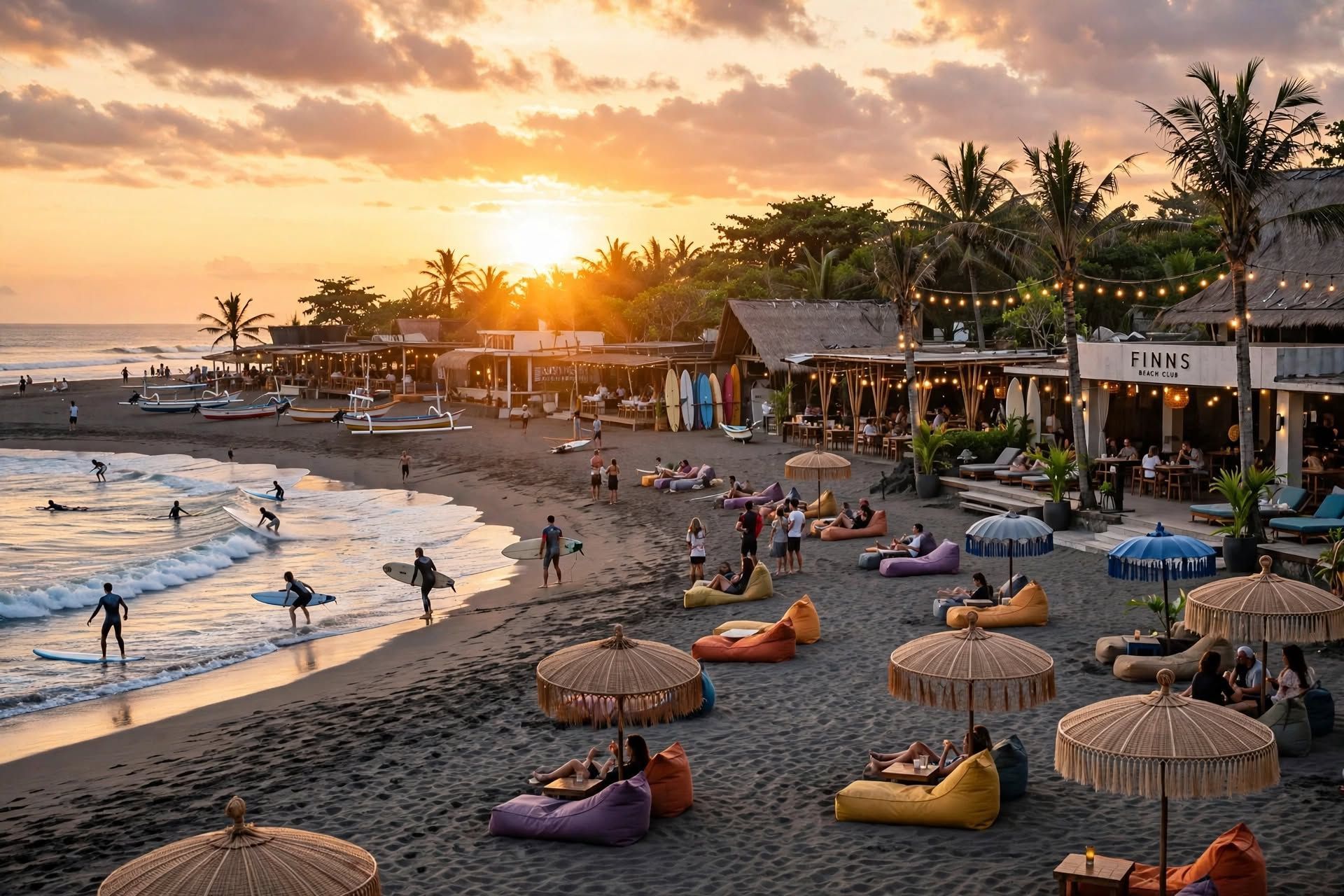
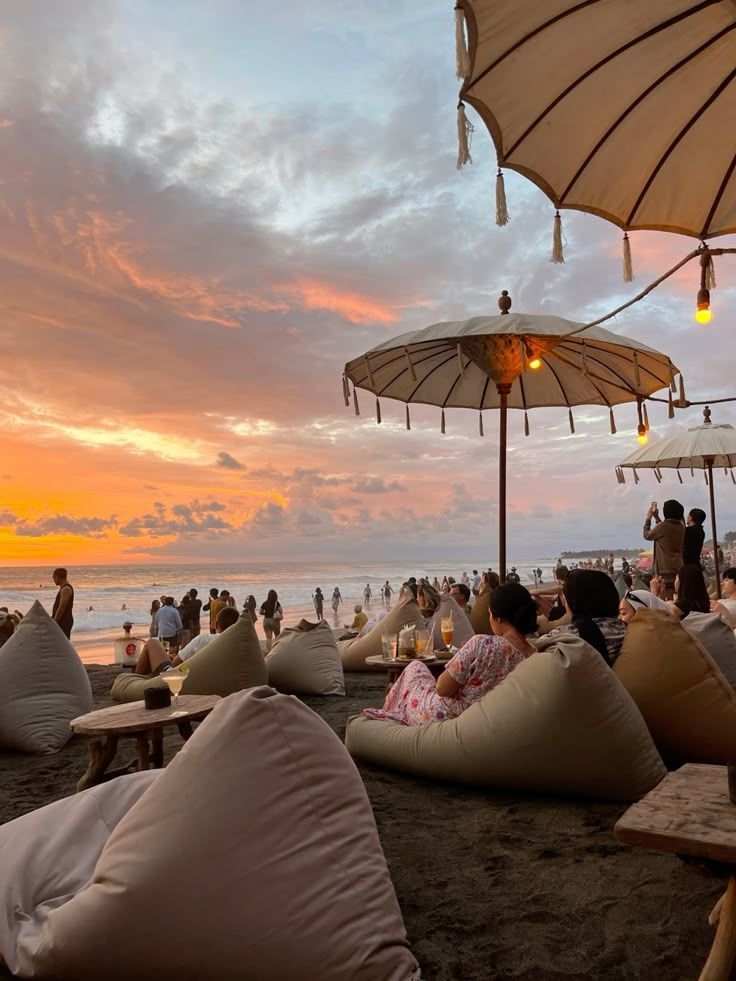
Canggu is often introduced to the world through a very specific collection of images: a scooter parked outside a stylish café, a laptop beside an iced coffee, a surfer walking toward the ocean, a sunset over the beach, a beautifully designed villa hidden behind tropical plants, or a crowded brunch spot filled with travelers from different corners of the world. These images are not necessarily inaccurate. They are part of modern Canggu, and they are part of the reason the area has become one of Bali’s most recognizable destinations. But they only tell one part of the story. There is another Canggu that begins to appear when you stop looking for attractions and start paying attention to everyday life. It can be found in the narrow roads behind the main streets, in the small warungs that open early, in the sound of scooters moving through residential lanes, in the offerings carefully placed near entrances, in farmers working between increasingly developed areas, in neighborhood temples, in local shops, in delivery drivers moving from one address to another, and in rice fields that still survive between villas, cafés, guesthouses, and construction sites. Canggu is not simply a destination that was built for visitors. It is also a living community, and that distinction matters. Research on Canggu describes how the village has transformed from a fishing and farming community into an increasingly urbanized tourism area, with tourism becoming a major part of its economic activity. Another recent study focusing specifically on Canggu's traditional village describes the rapid growth of tourism infrastructure since around 2010 and the resulting changes in land use, traffic, noise, gentrification, and community life. But if you arrive in Canggu today without knowing this history, you might never realize how different the landscape once was. The modern traveler can move through the area almost entirely through the tourism layer: wake up, have breakfast, work from a café, go to the beach, visit a restaurant, watch sunset, and return to a villa or hotel. Everything is convenient, beautiful, and designed around movement. Yet just a few minutes away, another rhythm continues. Someone may be sweeping a family compound. A small shopkeeper may be arranging goods before opening. A farmer may be checking a rice field. Someone may be preparing canang sari, the small daily offerings that are part of Balinese Hindu life. A temple may be preparing for a religious activity that has nothing to do with tourism. Children may be going to school while tourists are beginning their morning coffee. A local family may be having breakfast in a simple warung while visitors sit at a modern café across the road. These scenes are not competing versions of Canggu. They are Canggu existing simultaneously in different layers. That is what makes the area so fascinating. The visitor does not need to reject the modern version of Canggu to appreciate the older one. There is nothing wrong with enjoying a good coffee, learning to surf, visiting a beach club, or spending an afternoon by the pool. Those experiences are part of the destination's current identity. The opportunity is simply to look a little further. When you slow down enough to notice the spaces between the famous places, Canggu starts to feel less like a tourism product and more like a neighborhood. You begin to see that the road leading to your favorite restaurant may also be someone's daily route to work. The rice field that looks beautiful in a photograph is also agricultural land. The small temple you pass on the way to the beach is not a decorative object. The offerings on the pavement are not props placed there for visitors. The narrow shortcut that appears on a travel map may be part of the everyday movement of residents. Even the sounds of Canggu tell a different story. There is the constant movement of scooters, but there are also birds, conversations, construction, dogs, temple sounds, irrigation water, kitchen activity, and the occasional quietness that appears between busy periods. This is the Canggu that does not always make it onto Instagram because it is not designed to be photographed. It simply happens. And perhaps that is precisely why it is worth noticing. The most authentic travel experiences are not always found by searching for something extraordinary. Sometimes they happen when you recognize something ordinary as meaningful. A woman placing an offering outside her home. A farmer walking across a field. A local shop opening its doors in the morning. A family sitting together in a neighborhood warung. A street becoming quiet after a busy afternoon. These are small moments, but they tell you that the place you are visiting is not a stage. It is someone's everyday life. For travelers staying in Canggu, this realization can change the way the entire destination feels. Suddenly, the trip becomes less about collecting locations and more about understanding the environment around you. You are no longer simply visiting Canggu. You are temporarily living alongside it. And that difference can make a short stay feel much richer.
.
A Morning in Canggu Before the Cafés Get Busy
There is perhaps no better way to discover the everyday side of Canggu than to wake up early and walk outside before the neighborhood reaches its daytime rhythm. Canggu in the morning can feel surprisingly different from Canggu in the afternoon. The roads may still be relatively quiet, the tropical air feels cooler, and the light creates a softness that disappears once the sun becomes stronger. Before brunch menus begin appearing on social media and before scooters start filling the main roads, local life is already underway. A shopkeeper may be opening a small store, a worker may be preparing a roadside stall, someone may be sweeping the entrance to a home, and families may be beginning their routines. In Bali, morning also has a cultural dimension that is easy for visitors to notice once they know what they are looking at. Small canang sari offerings can be seen near doorways, temples, shops, sidewalks, and other spaces. They are daily offerings made from woven palm leaves, flowers, and other elements, and their preparation and placement are connected to Balinese Hindu expressions of gratitude and devotion. A recent overview of the tradition notes that canang sari are commonly prepared as part of a daily ritual and placed in many everyday spaces, making them an important part of the visual environment visitors encounter throughout Bali. For someone seeing them for the first time, these small arrangements might appear to be colorful decorations. But their presence tells you that everyday life in Bali contains layers of meaning that are not immediately visible to outsiders. The offering is part of a routine, not a performance for tourists. It happens whether someone is watching or not. This is an important distinction when exploring Canggu. Much of tourism is based on experiences that are intentionally presented: a restaurant designs its interior, a café creates a particular atmosphere, a hotel prepares its lobby, and a beach club curates the sunset experience. Everyday culture operates differently. It does not necessarily announce itself. It is simply practiced. A traveler walking through Canggu early in the morning may therefore experience moments that are much more spontaneous than anything found on a standard itinerary. Perhaps there is a local vendor pushing a cart along a narrow road. Perhaps a farmer is walking through a field. Perhaps a temple gate is being opened. Perhaps a neighborhood is still quiet while the first scooters begin moving toward work. Perhaps the smell of incense mixes with the smell of breakfast from a nearby warung. These details create an atmosphere that cannot easily be replicated in a resort environment. They are also reminders that Canggu is more than its tourist-facing streets. The area's remaining rice fields are particularly important to this understanding. Contemporary descriptions of Canggu's rice fields note that they are woven through neighborhoods rather than isolated as a separate attraction, creating a patchwork between villas, cafés, roads, and other developments. Research has also documented a significant decline in agricultural land in Canggu and raised concerns about what continued development could mean for the area's agrarian identity. When you walk beside one of these fields in the morning, therefore, you are not simply looking at a pretty green landscape. You are looking at part of a much older system of life that existed before Canggu became famous internationally. The contrast can be striking. On one side there may be a rice field glowing in the morning light. On the other side there may be a newly built villa or modern café. A scooter passes between them. A farmer continues working. A tourist walks toward breakfast. A delivery driver checks a phone. Different versions of Canggu occupy the same few meters of space. This is one of the reasons early morning is such a valuable time for travelers. It allows you to see the destination before the tourism machine reaches full speed. You begin to notice the people who make the area function. You see deliveries arriving, businesses opening, streets being cleaned, and workers beginning their shifts. Hospitality itself becomes visible. The person preparing breakfast, the driver delivering supplies, the cleaner opening a property, the gardener maintaining plants, and the shopkeeper arranging products are all part of the destination experience, even though travelers rarely photograph them. At Aviator Bali, this is also why the morning can be one of the most enjoyable times for guests to simply step outside without a plan. You do not necessarily need an organized tour. You do not need a list of attractions. A short walk around the neighborhood can reveal details that a full-day itinerary might completely miss. The goal is not to “discover hidden Canggu” as though local life were a secret attraction. Rather, it is to understand that the place already has a life of its own. Travelers are guests within that environment. Once you begin seeing Canggu in this way, the morning becomes more than the beginning of a holiday day. It becomes an invitation to observe.
Rice Fields Between Villas: The Landscape That Explains Canggu
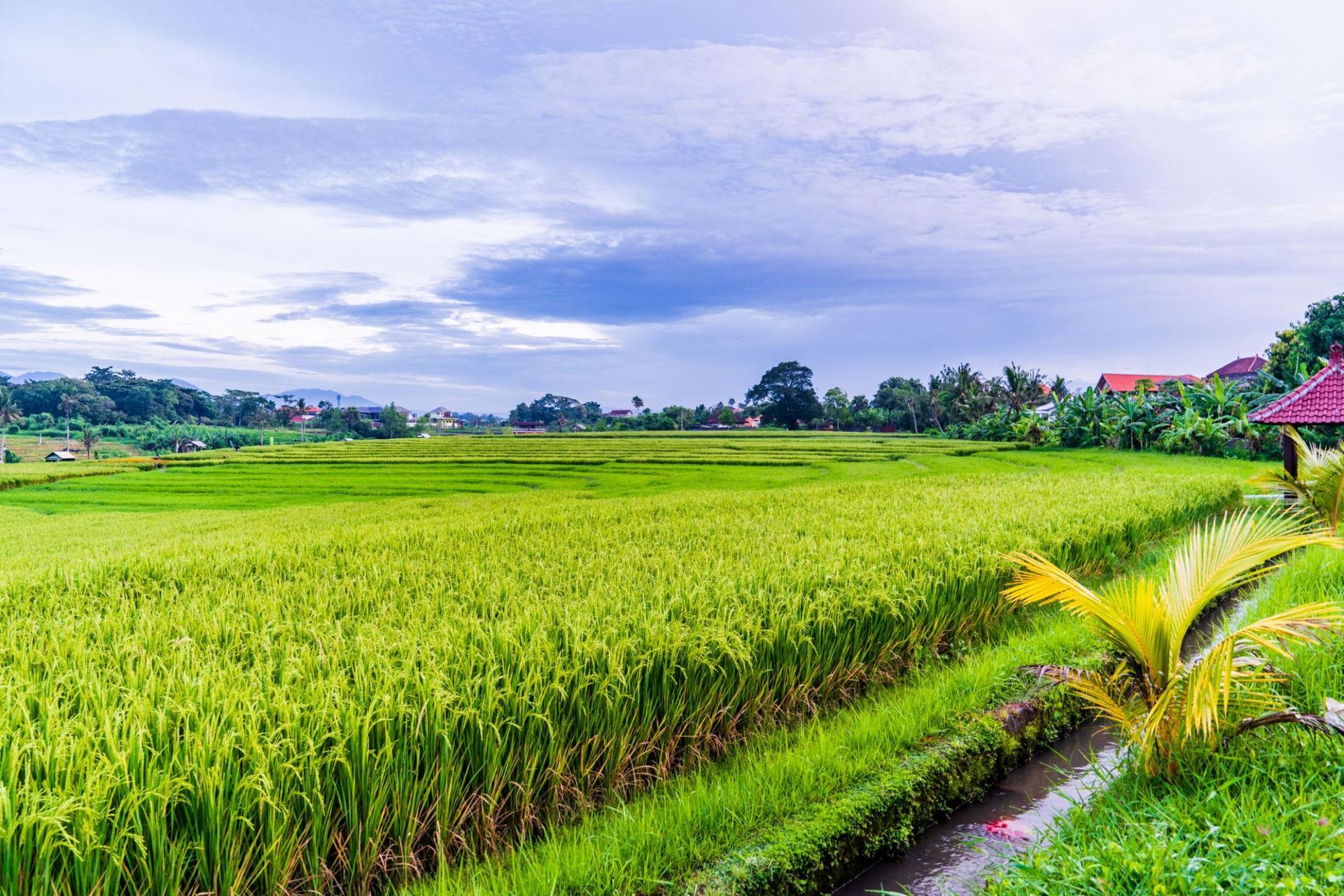
Perhaps nothing explains the transformation of Canggu better than the sight of a rice field surrounded by modern development. Stand in certain parts of the area and you can see two different eras of Bali at once: green agricultural land stretching toward the horizon while villas, cafés, restaurants, guesthouses, construction projects, and residential buildings rise around it. This visual contrast is so familiar today that visitors can easily forget how unusual it actually is. Canggu's identity has been deeply connected with agriculture, and research into the area's transformation repeatedly points to the movement from farming and fishing toward tourism and urban development. One academic study describes Canggu as having shifted from a fishing and farming village into an urban-characterized area whose economy is increasingly based on tourism. Another study published in 2024 specifically highlights the agricultural identity of Canggu and notes the annual decline in agricultural land, warning that continued trends could eventually threaten the remaining agricultural areas. This does not mean that every rice field visible in Canggu is untouched or that every field represents the same traditional system. The landscape is more complicated than that. But the remaining fields provide a visible reminder of the environment that shaped the area before international tourism accelerated. They also provide a different kind of beauty from the one usually associated with Bali. Instead of infinity pools, architecture, or ocean views, rice fields offer repetition, open space, water, reflected light, changing shades of green, and a sense of agricultural rhythm. A field can look completely different depending on where it is in its growing cycle. Young rice can create an intense green surface. Mature crops become heavier and more golden. After harvest, the landscape can appear almost empty before the next cycle begins. Water channels, narrow paths, small bridges, and farmers moving between plots add another layer to the scene. This agricultural landscape is not simply background scenery. It is a working environment. That distinction is important for visitors. When travelers walk through rice fields because they look beautiful, they are entering spaces that may have practical functions for local people. Being respectful means staying on appropriate paths, avoiding damage to crops, not treating private land as a public attraction, and understanding that a beautiful photograph can exist because someone is maintaining that landscape. The remaining fields also raise a larger question about what people mean when they say they want to experience “the real Bali.” Many travelers search for authenticity, but authenticity is not something that can be frozen in time. Canggu is changing, and the people who live there are changing with it. Tourism has created jobs, businesses, new infrastructure, and opportunities, while also creating concerns around congestion, noise, gentrification, land use, and environmental pressure. A recent academic study involving residents, farmers, tourism operators, religious leaders, and youth representatives found that local perceptions of tourism are complex: tourism provides economic opportunities and infrastructure, while rapid development also creates disruptions and tensions. Another study examining tourism's effect on the local community found benefits including increased income, employment opportunities, and infrastructure, while also identifying concerns about the movement away from agriculture and its implications for food security and traditional livelihoods. This complexity is important because it prevents the story of Canggu from becoming overly romantic. It is easy to write that “Canggu used to be a peaceful rice-field village and now tourists have ruined it,” but reality is much more complicated. Tourism is part of why Canggu has become economically significant. Many local families have found new opportunities through accommodation, food, transportation, services, and other businesses. At the same time, development creates real pressures that communities have to manage. The story is therefore not simply about old Canggu versus new Canggu. It is about how a community adapts while trying to decide what should remain. For a traveler, this makes the rice fields even more interesting. They become a way of reading the landscape. You can see where the old and new meet. You can see how roads cut through agricultural areas. You can see villas rising behind fields. You can see local temples surrounded by modern buildings. You can see people commuting through spaces that were once primarily agricultural. The landscape becomes a visual timeline. And perhaps this is why some of the most memorable experiences in Canggu happen not at a famous attraction but on a quiet road between two places. You might be heading somewhere else entirely and suddenly find yourself surrounded by green fields. There may be no entrance fee, no ticket booth, no official viewpoint, and no sign telling you that this is a “must-see.” Yet the view can explain more about Canggu than a carefully curated tourist attraction ever could. It shows you a destination in transition. It shows you that Bali's beauty is not only found in places that were designed to be beautiful. Sometimes it survives in the spaces between development. And those spaces are worth noticing.
The People Who Keep Canggu Moving
It is easy to think about a destination through places: the beach, the café, the hotel, the restaurant, the temple, the rice field. But places do not operate on their own. Canggu works because thousands of people move through it every day, and many of them are almost invisible in the way tourism is usually presented. The driver who brings a guest from the airport. The person delivering fresh ingredients to a restaurant. The local worker opening a café before sunrise. The gardener trimming plants outside a villa. The laundry team sorting sheets. The farmer working in a field. The mechanic repairing a scooter. The small warung owner preparing breakfast. The construction worker building another property. The person collecting waste. The receptionist welcoming a traveler. The barista making coffee. The people cleaning roads and maintaining neighborhood spaces. Together, these people create the Canggu that visitors experience. Without them, the cafés would not open, the villas would not operate, the hotels would not function, the roads would not move, and the destination would not feel the way it does. This is why looking at everyday life can change the way travelers understand hospitality. Hospitality is not only the moment when someone says “Welcome.” It is an entire network of people working behind the scenes to make a place function. Canggu's tourism growth has created substantial economic opportunities for local communities, and research into the area identifies increased income, employment, and infrastructure among the benefits associated with tourism development. But the same growth also changes the nature of work. Some people who once depended primarily on agriculture may now work in tourism or tourism-related services. Others may combine farming with hospitality or other businesses. Families may have members working in different parts of the tourism economy. This creates a complicated social landscape in which agriculture and tourism are not always separate worlds. They overlap. A person may work at a hotel during the day and still maintain family land. A local family may operate accommodation while remaining connected to a traditional community. A shop may serve both residents and international visitors. A neighborhood road may carry tourists heading toward a beach while also carrying residents going to work. The boundaries are constantly moving. For visitors, one of the easiest ways to respect this environment is to recognize the difference between service and servitude. Someone working in hospitality is not simply part of the holiday experience; they are a person with their own life, family, responsibilities, and community. A small gesture of respect can therefore have more meaning than travelers sometimes realize. Greeting people politely, being patient when roads are busy, understanding that traffic can affect workers as much as tourists, keeping noise appropriate in residential areas, disposing of waste properly, and treating local customs respectfully are simple ways of becoming a more considerate guest. This does not mean turning a holiday into a moral lesson. Travel should still be fun. It simply means understanding that enjoyment takes place within a real community. Canggu's changing landscape makes this particularly relevant. A 2025 study on overtourism sensitivity found that local residents identify issues such as traffic congestion, noise pollution, long-term foreign residents, rapid gentrification, and inter-community tensions as some of the disruptions associated with tourism growth. At the same time, the same research emphasizes that residents' views are not uniform and are shaped by different socioeconomic circumstances. That is important because it reminds us that there is no single “local opinion” about Canggu. Some people benefit enormously from tourism. Some experience its negative effects more directly. Some see both sides. Some may welcome new opportunities while worrying about environmental or cultural changes. This complexity is part of the real Canggu story. For a hotel like Aviator Bali, operating within this environment means hospitality is naturally connected to the neighborhood around it. Guests arrive with their own expectations of Bali, but the experience becomes richer when they understand that the hotel is not isolated from its surroundings. The staff, suppliers, drivers, laundry services, maintenance workers, local businesses, and neighboring communities all form part of the larger ecosystem. A guest who spends money at a local warung, chooses a local service provider, or simply treats the neighborhood respectfully participates in that ecosystem. This is not about presenting “local life” as an attraction. In fact, one of the most important things a traveler can learn is that not every part of everyday life needs to become a tourism experience. Some streets are simply residential streets. Some temples are places of worship. Some rice fields are working farms. Some shops exist primarily for local residents. Some people are simply going about their day. You do not need to photograph everything to appreciate it. Sometimes the most respectful form of travel is to observe without turning every moment into content. And perhaps that is another reason the everyday Canggu story is so different from Instagram Canggu. Instagram is built around moments that demand attention. Everyday life is built around moments that usually do not. A local worker carrying supplies may never appear in a travel brochure, but that person may be more essential to the destination than any landmark. A farmer walking through a rice field may not be a tourist attraction, but the field itself helps define the landscape visitors come to experience. A receptionist preparing a room may not be part of the vacation photograph, but the comfort of that room depends on the work being done. When you begin seeing these connections, Canggu becomes less like a collection of places and more like a living network. And that is perhaps the best way to understand a destination: not only by asking what you can see, but by asking who makes what you see possible.
Maybe the Best Way to Experience Canggu Is to Stop Trying to Find It
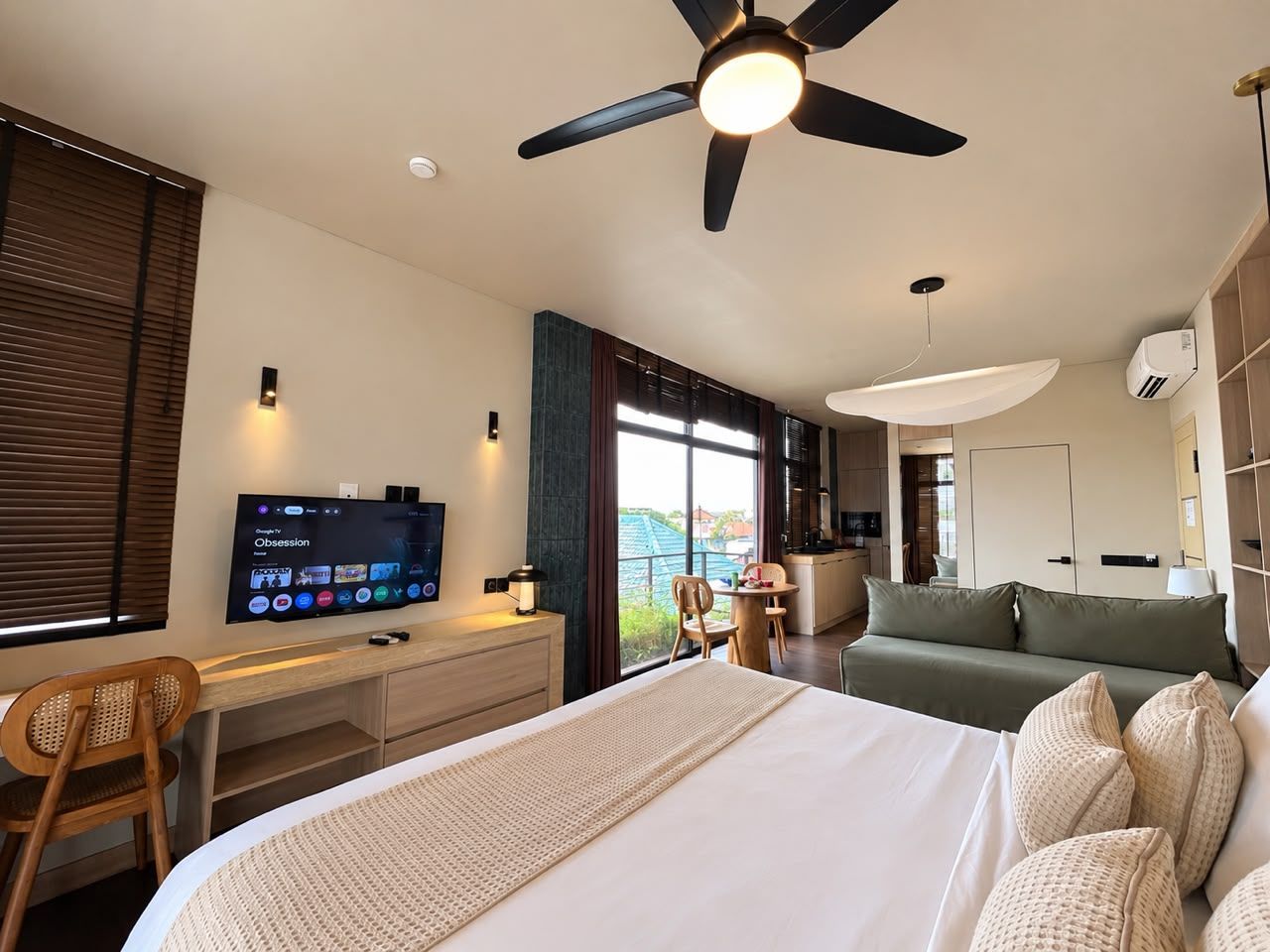
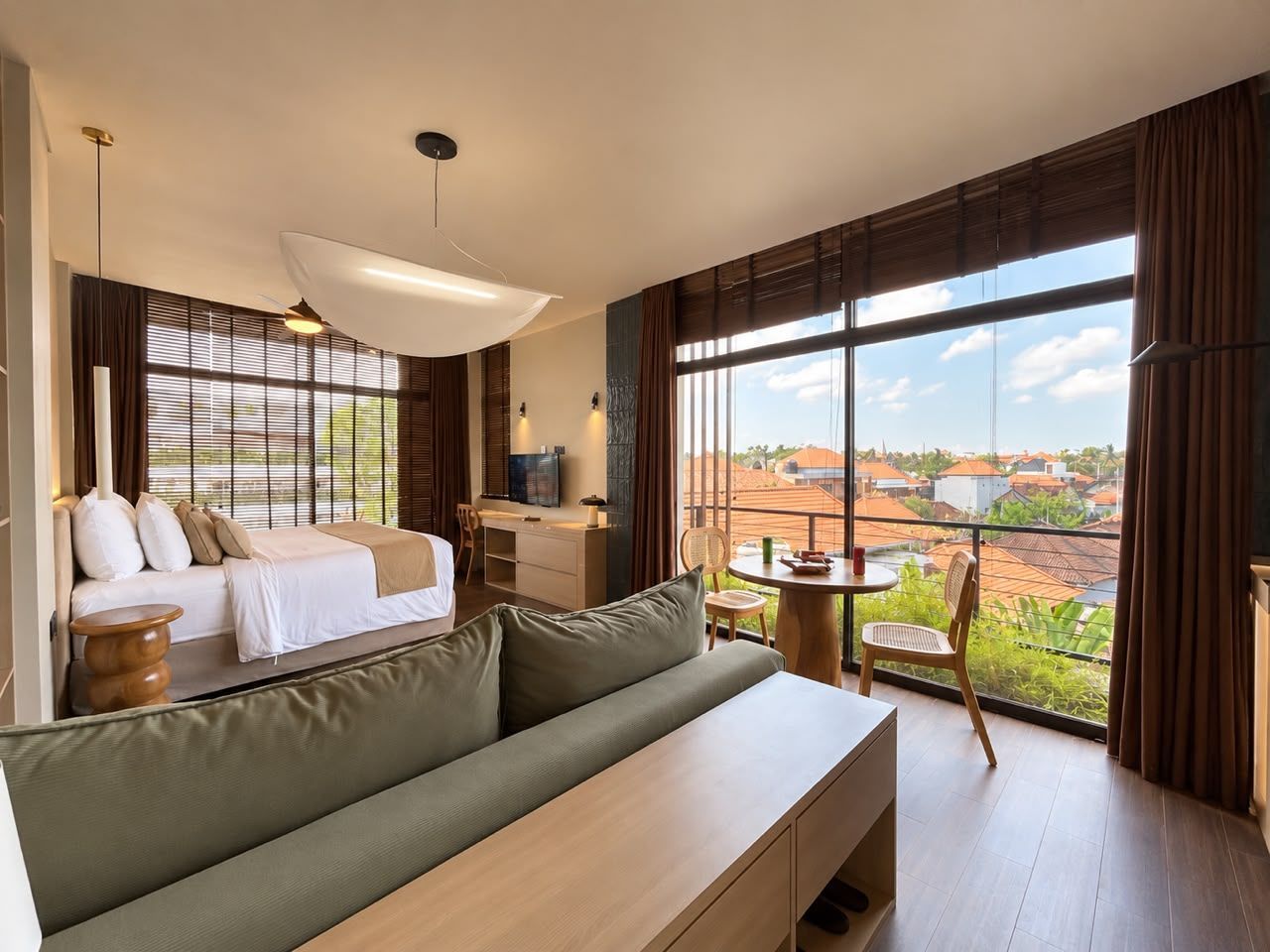
There is a strange paradox about traveling to Canggu. The more aggressively you try to “find the real Canggu,” the less likely you may be to experience it. You search for hidden cafés, secret beaches, undiscovered rice fields, quiet roads, local spots, and places that have not yet been discovered by tourists. But the moment those places become part of a list called “hidden gems,” they are no longer hidden. They become destinations to be consumed. Perhaps a better approach is much simpler: slow down and allow the neighborhood to reveal itself. Take a morning walk without opening a map every five minutes. Choose a small local restaurant because it looks busy with residents rather than because it has thousands of online reviews. Walk a little further instead of taking a scooter for every short journey. Notice the architecture around you. Pay attention to the offerings placed near entrances. Look at the relationship between houses, temples, gardens, businesses, and roads. Watch how the neighborhood changes from morning to afternoon and afternoon to evening. Notice how the rice fields look different under different light. Listen to the sounds around you. You may discover that Canggu does not need to be “found.” It is already there. This approach also fits with a broader shift toward slower forms of travel. Travelers increasingly seek experiences that allow them to spend more time in one place rather than moving constantly between attractions. Canggu is particularly suited to this because it contains so many overlapping environments within a relatively compact area: beaches, rice fields, residential neighborhoods, cafés, restaurants, temples, small shops, creative businesses, and hospitality properties. A traveler can spend an entire morning exploring without completing a traditional sightseeing itinerary. The experience can be as simple as walking toward breakfast, stopping to look at a rice field, buying something from a small shop, sitting for coffee, returning to the hotel, and later watching the sunset. Nothing dramatic needs to happen. That is the point. Slow travel creates space for ordinary moments to become memorable. It also creates a more realistic understanding of the destination. When you stay somewhere for several days, you begin to recognize patterns. You notice which roads are quiet in the morning and busy later. You recognize the same shopkeeper. You start seeing the same local dogs. You notice the changing light over the rice fields. You become aware of the weather. You learn which café has a different atmosphere in the afternoon. You understand that Canggu is not one single mood. It can be energetic, peaceful, chaotic, tropical, modern, traditional, social, quiet, crowded, and unexpectedly empty depending on where you are and what time you step outside. This is one reason longer stays can feel completely different from short visits. In three days, you may remember Canggu through a checklist. In three weeks, you may remember it through routines. You may have a favorite breakfast place, a familiar route, a preferred coffee shop, a quiet corner, and a particular road you enjoy walking down in the evening. You stop feeling like someone who is constantly arriving somewhere and start feeling temporarily connected to a place. That is the experience many travelers are searching for when they talk about “living like a local,” although perhaps it is better described as simply being present. You do not become local because you drink coffee in the same café or stay for a month. You remain a visitor. But you can become a more attentive visitor. And attention is often what turns travel into understanding. At Aviator Bali, this idea fits naturally with the experience of staying in Canggu. A comfortable room can be the quiet space you return to after spending hours outside. The neighborhood becomes part of the stay rather than merely the location printed on the booking confirmation. Guests can start their day slowly, explore nearby streets, work when necessary, return for a break, and head out again when the atmosphere changes in the evening. The property becomes a base rather than the entire experience. And perhaps that is exactly what a stay in Bali should be. You do not need to experience everything. You do not need to visit every café, every beach club, every restaurant, or every attraction. You certainly do not need to turn every day into a race against a checklist. Sometimes the best Bali memories are the ones you did not plan. A road you accidentally walked down. A small warung you noticed while looking for something else. A quiet rice field seen from a scooter. A sudden tropical rain that changed your afternoon. A conversation with a local driver. The sound of incense and flowers being arranged in the morning. A sunset that happened to be particularly beautiful that evening. These moments do not necessarily appear in search results. They do not require reservations. They may not even have names. But they can become the memories that stay with you long after you leave. This is the Bali that Instagram cannot fully capture. Not because Instagram is fake, but because a photograph can only show one frame. Canggu is a continuous story. It changes every hour, every season, every year. It is shaped by people, weather, tourism, agriculture, culture, business, and everyday routines. The most interesting version of Canggu is therefore not the one that exists in a perfect photograph. It is the one that exists when you put the phone away for a moment and simply look around. Maybe you see a farmer working beside a new villa. Maybe you hear a temple bell while scooters pass. Maybe you smell incense outside a shop. Maybe you notice children returning home from school while tourists head toward the beach. Maybe you walk past a rice field that somehow survived between buildings. Maybe you sit at a café and realize that the road outside is telling a much bigger story than the menu inside. These are the moments when Canggu begins to make sense. And perhaps that is the real invitation: do not only come to Canggu to see what everyone else has photographed. Come slowly enough to notice what everyone else may have walked past.