

Finding Stillness in Canggu: A Different Way to Experience Bali
Canggu is often described in extremes. For some, it is the energetic heart of Bali’s surf culture — vibrant cafés, creative spaces, and sunset crowds gathering along the shoreline. For others, it represents the fast-moving side of the island, a place of constant motion and visible momentum. Yet beyond these impressions lies another version of Canggu — one that moves at a quieter rhythm. This side is not found on the busiest streets or in the loudest venues, but in the spaces thoughtfully set back from the rush. It exists in early mornings before traffic builds, in afternoon light filtering through palm shadows, and in the understated corners where design prioritizes calm over spectacle. To experience Canggu this way requires intention. It means choosing where to stay with care, selecting spaces that allow you to participate in the energy of the area without being consumed by it. For travelers who appreciate balance — access without chaos, atmosphere without overwhelm — Canggu offers more than its surface reputation suggests. The key lies in finding stillness within proximity. When your base is designed to soften the noise of the outside world, the surrounding vibrancy becomes optional rather than intrusive. You can step into it when desired and step away just as easily. This flexibility transforms the experience. Instead of navigating Canggu defensively, you move through it deliberately. The cafés feel like choices, not obligations. The beaches feel expansive rather than crowded. Even the pace of the day shifts. In this version of Canggu, energy and calm coexist. The island does not need to be escaped in order to be enjoyed. It simply needs to be experienced from the right vantage point.
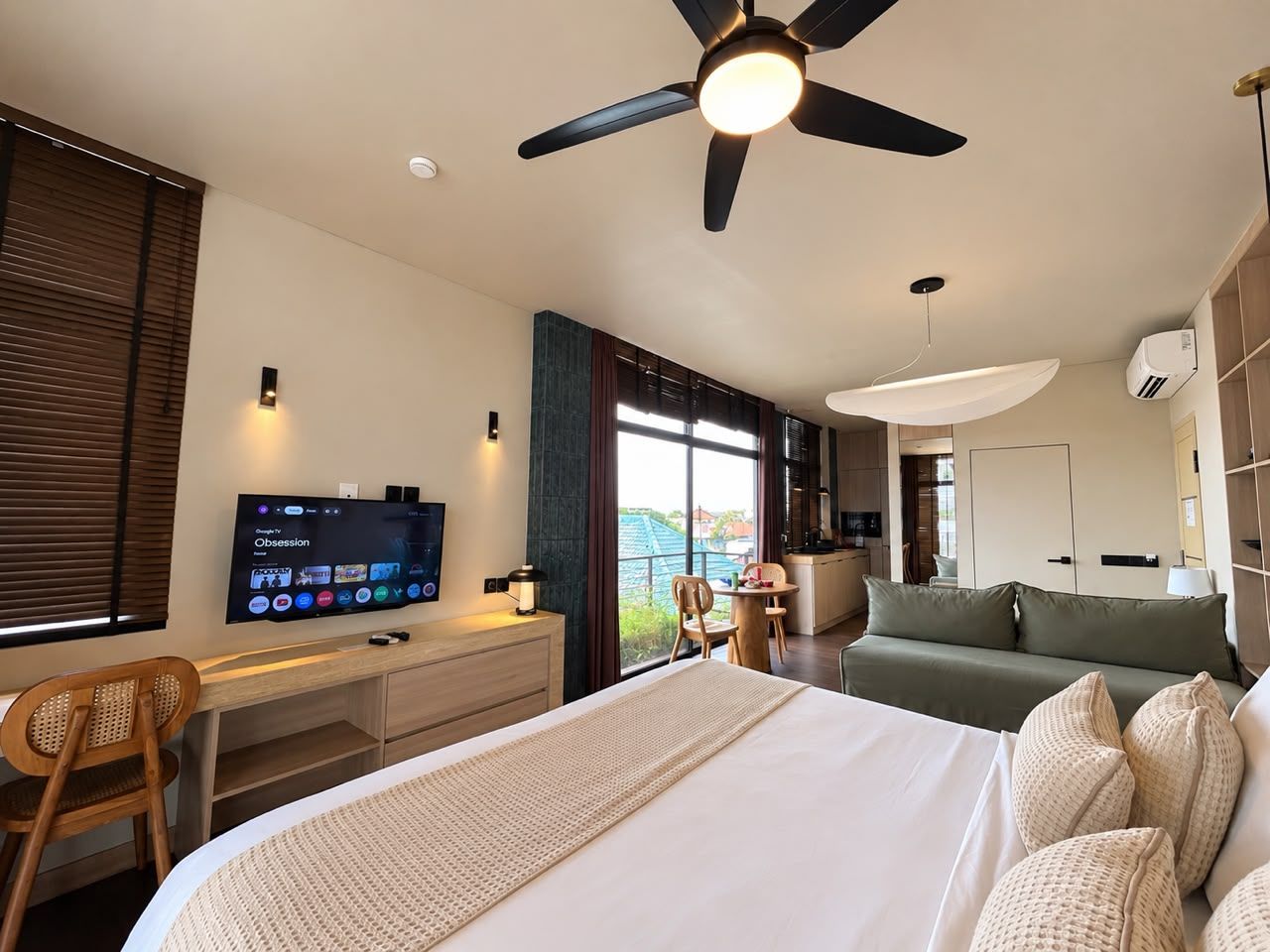
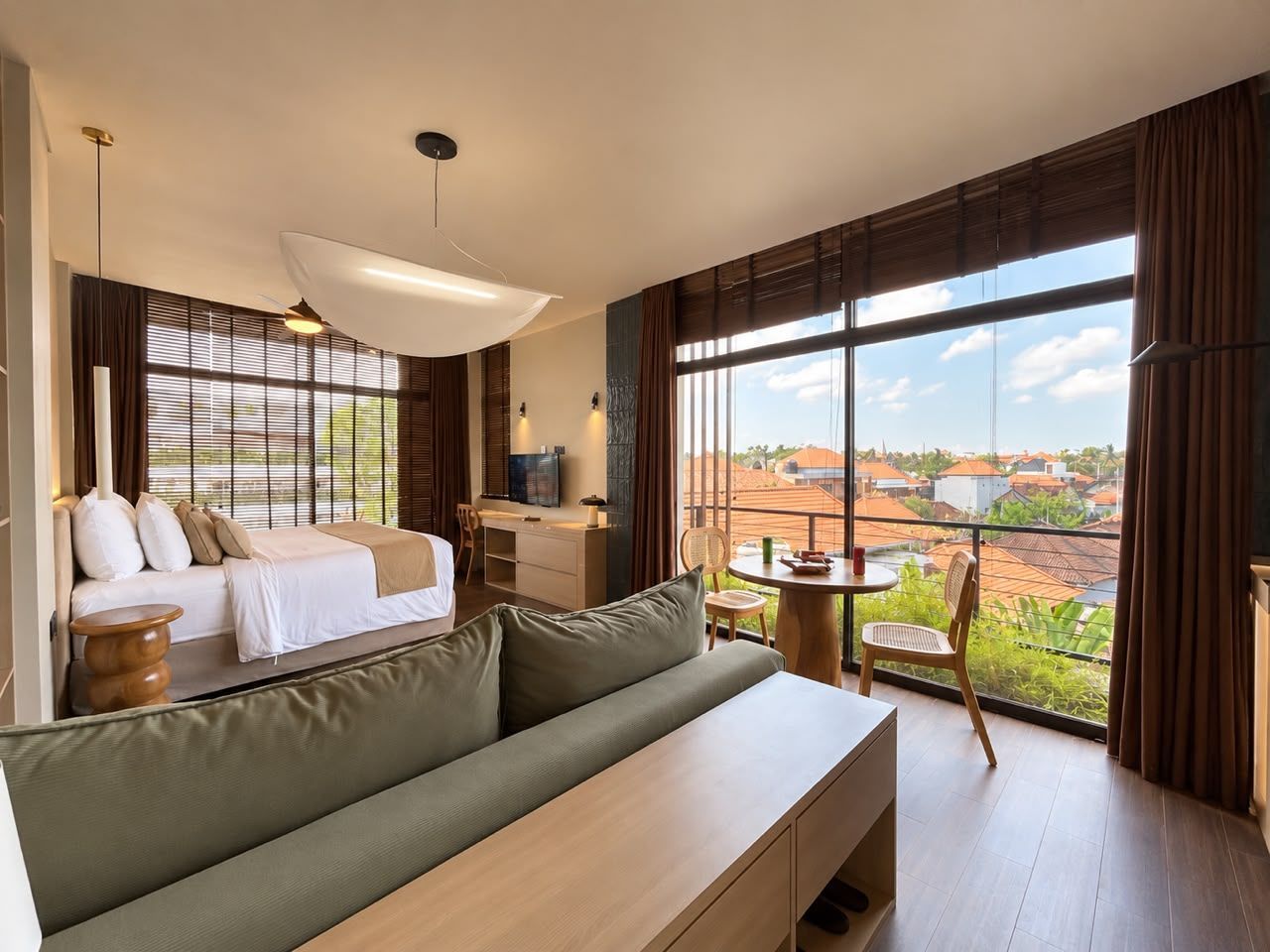
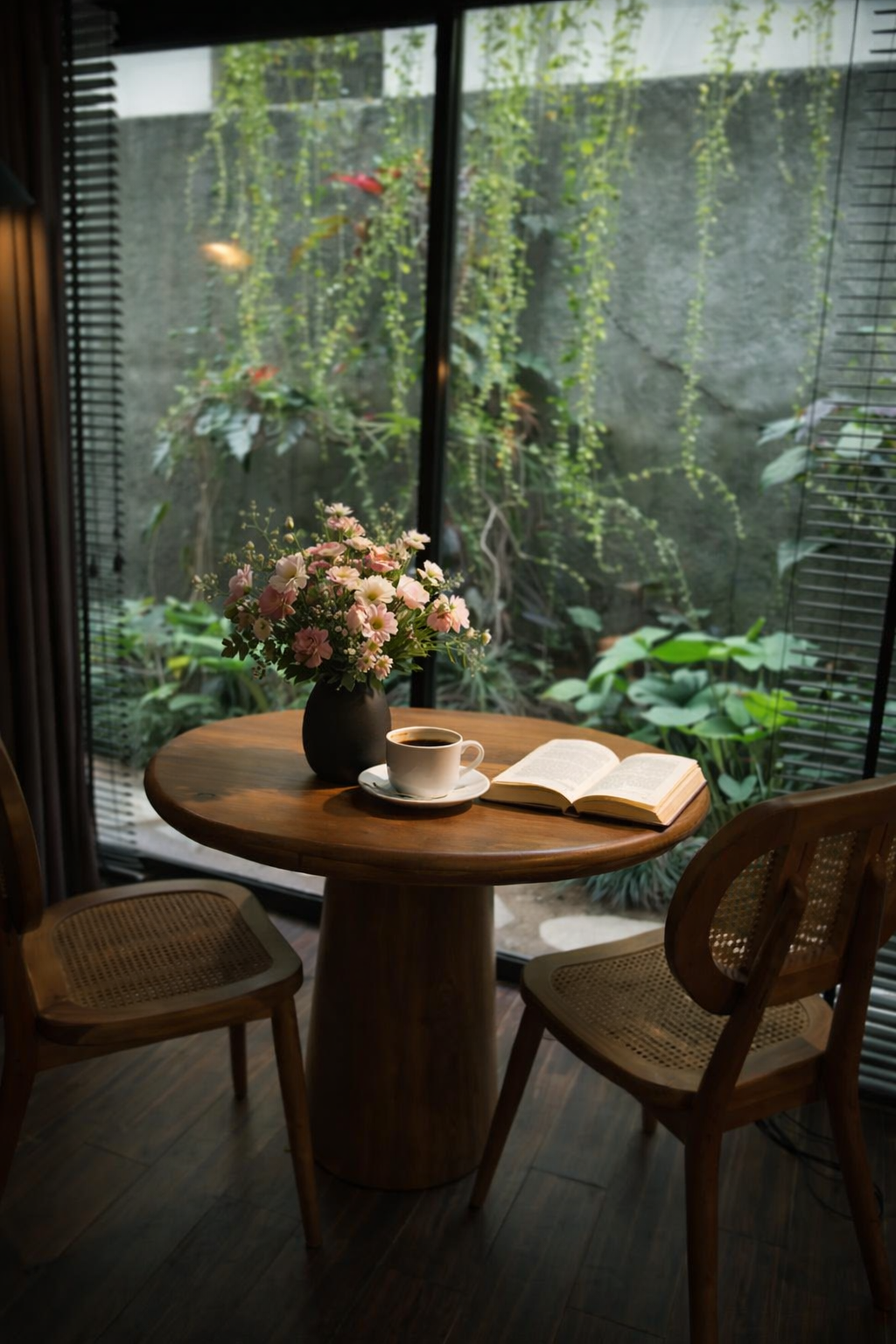
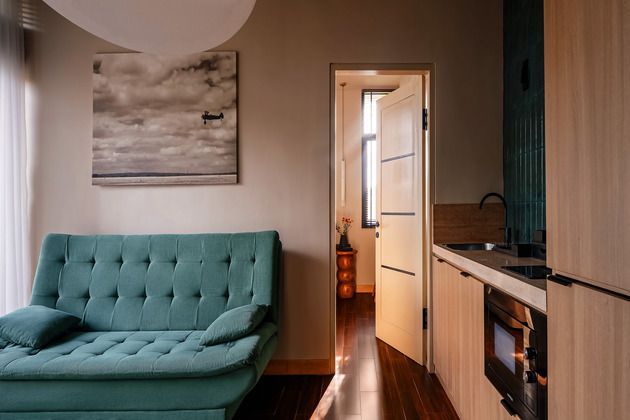
In a destination known for tropical ornamentation and layered textures, modern minimal design can feel unexpectedly grounding. Rather than competing with Bali’s natural beauty, it creates space for it to breathe. Clean architectural lines, balanced proportions, and restrained palettes reduce visual noise, allowing guests to settle more quickly. When the environment is uncluttered, the mind follows. This is particularly meaningful in Canggu, where external stimulation — traffic, music, conversation, movement — is constant. A thoughtfully designed interior becomes a counterpoint to that energy. It does not disconnect you from Bali; it recalibrates your experience of it.
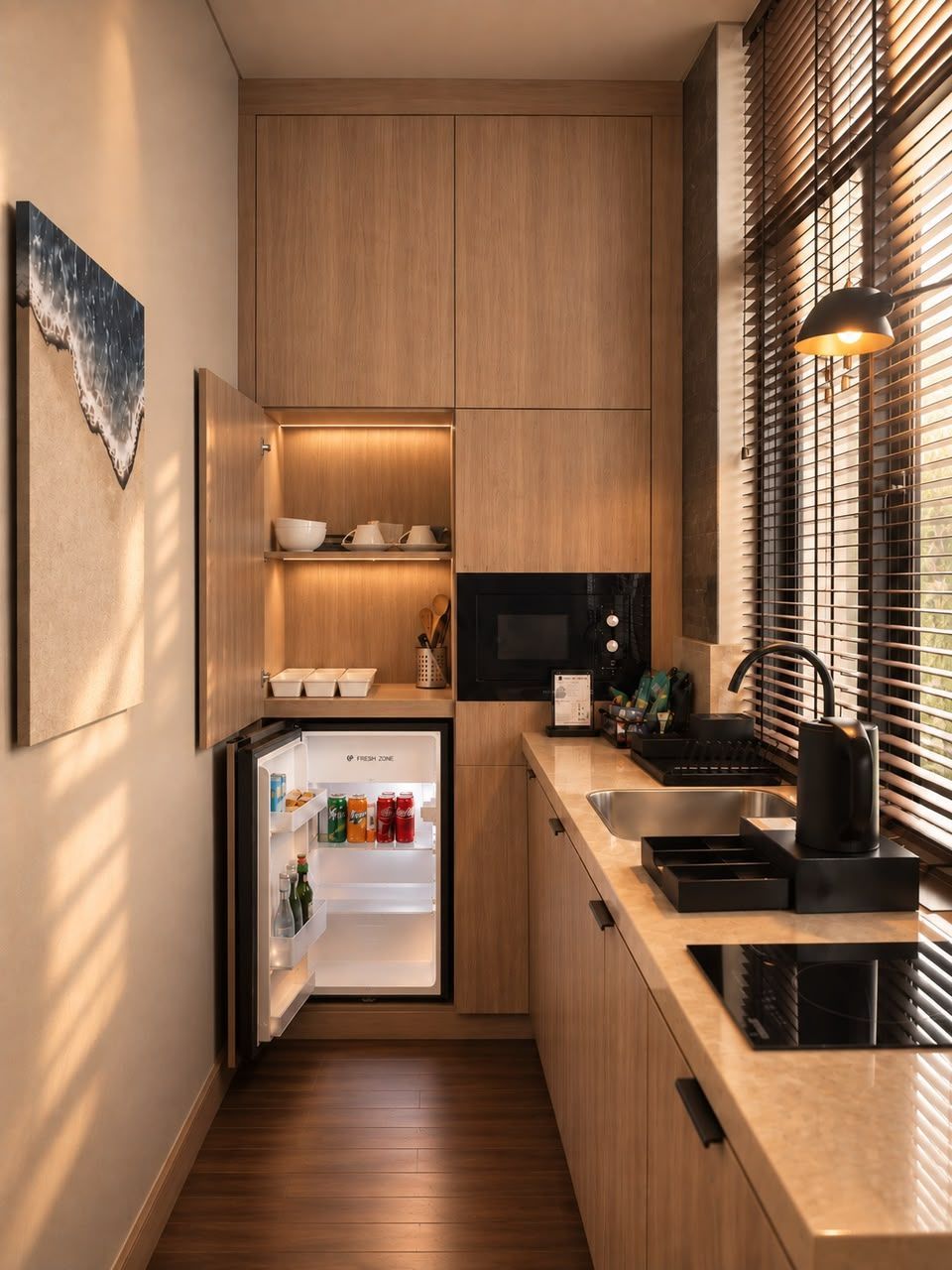
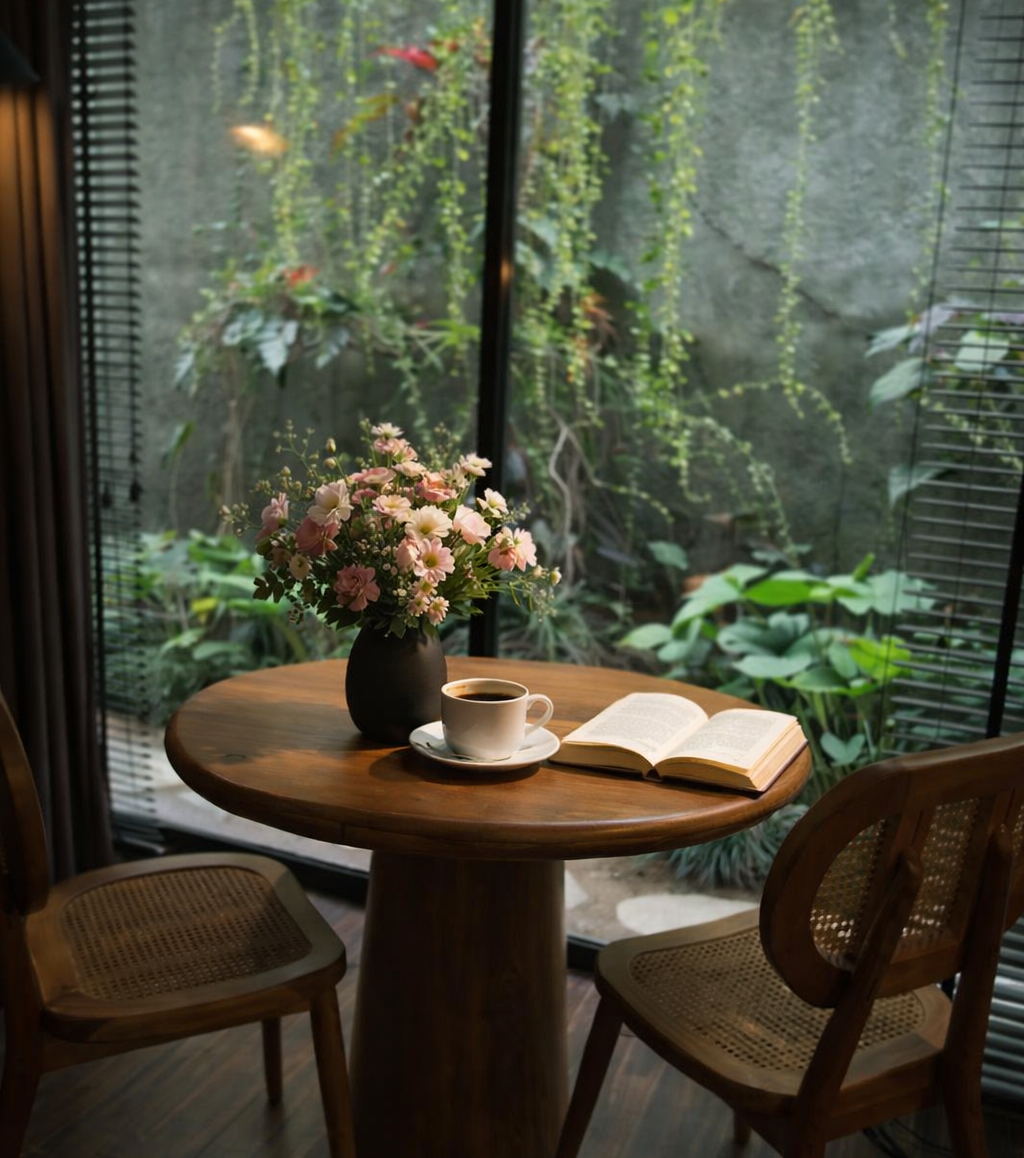
Modern design, when executed with warmth, is not sterile. It is intentional. Every element has purpose. Surfaces are chosen not only for aesthetics but for how they reflect light and absorb sound. Materials are selected for their tactile quality — smooth where calm is needed, textured where depth is desired. Furniture placement allows natural movement without friction. The result is a space that feels composed rather than crowded. This composition influences how guests behave within it. Voices lower naturally. Mornings begin more slowly. Even short stays feel less fragmented.
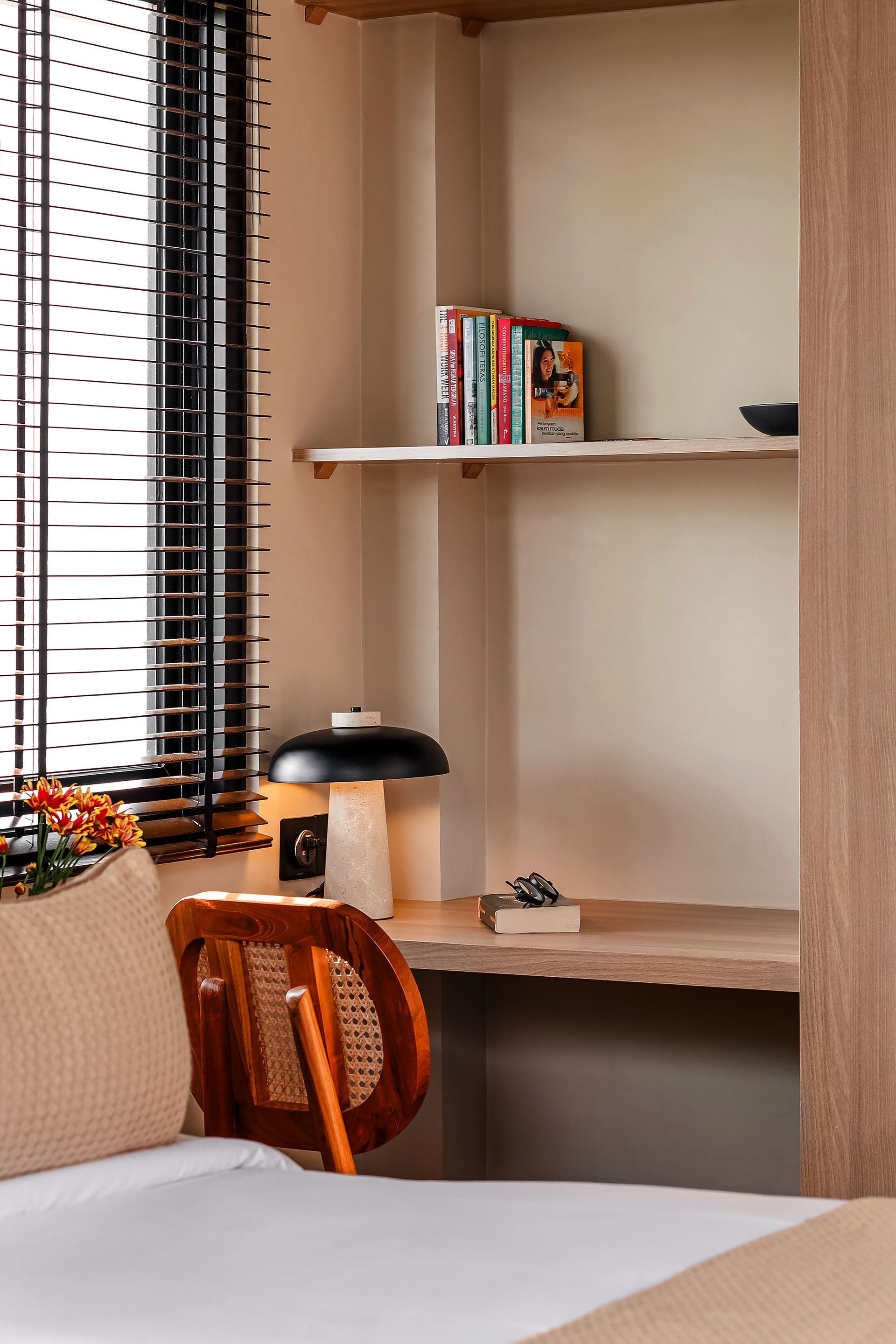
Minimalism also enhances flexibility. A well-designed room becomes a neutral canvas that adapts to different travel rhythms. For some guests, it is a productive base for remote work — clear desk surfaces, balanced lighting, and uncluttered backgrounds support focus. For others, it becomes a restorative retreat after long days exploring beaches and cafés. Because the space is not visually demanding, it supports both activity and rest without requiring adjustment.
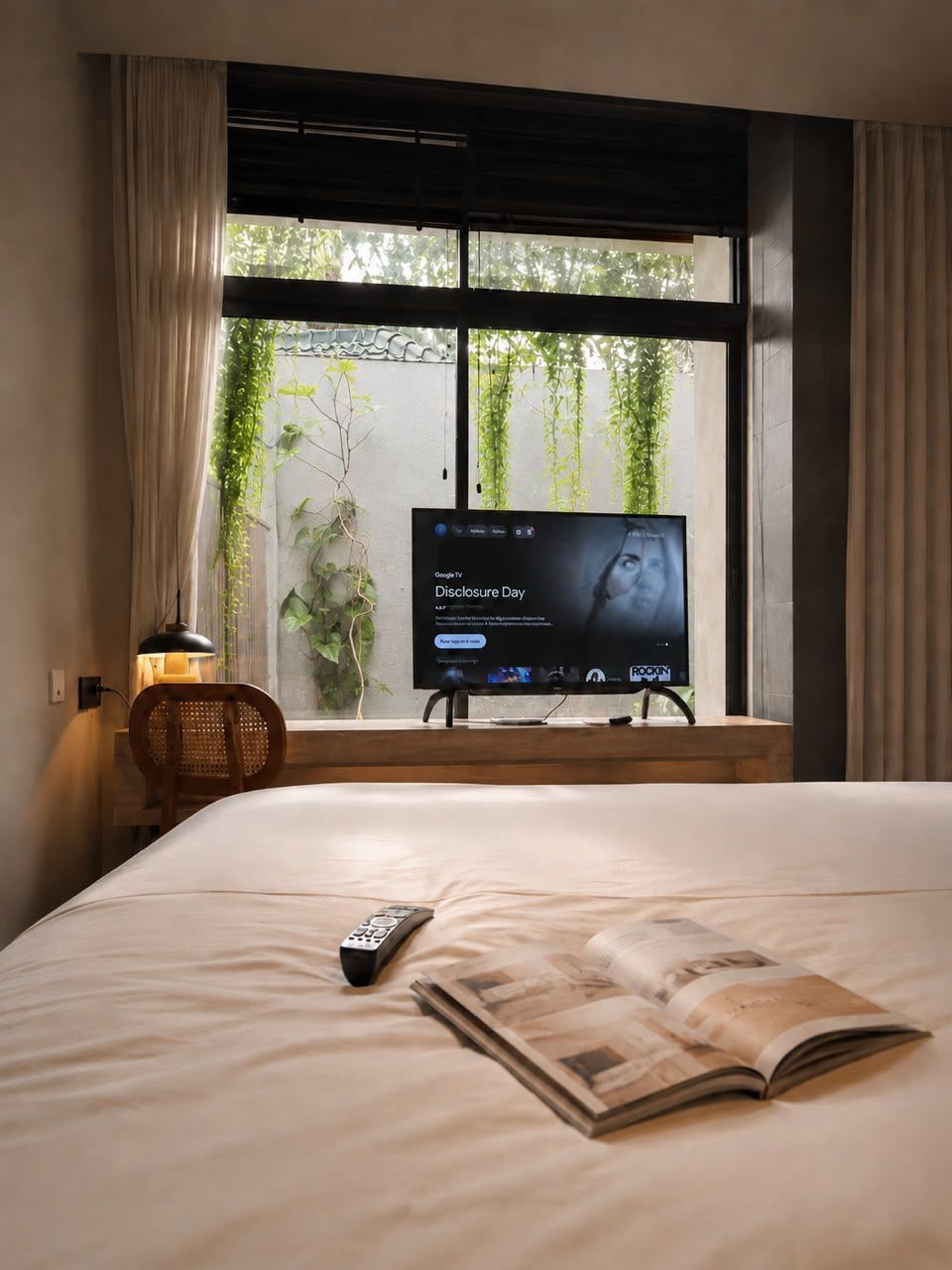
Importantly, modern hospitality in Bali does not need to abandon local context. Subtle integration of tropical elements — natural light, airflow, greenery, and open transitions between indoor and outdoor — maintains connection to place. The balance between contemporary structure and island atmosphere creates a distinct experience: refined but relaxed, polished yet unpretentious.
In Canggu, where the outside world moves quickly, returning to a space that feels architecturally calm changes the entire tempo of a stay. It allows guests to engage with the area on their own terms. Modern design, in this sense, is not about trend. It is about clarity. And clarity, especially while traveling, is a quiet luxury.
Location in Canggu is less about distance and more about positioning. Two properties may sit only minutes apart, yet offer entirely different experiences. The distinction lies in whether a space is embedded directly in the busiest flow or slightly set back from it. Being centrally located provides convenience — access to beaches, cafés, fitness studios, and boutiques within a short ride. But being slightly tucked away from the main strips provides something equally valuable: relief. In an area where movement rarely pauses, that relief becomes part of the stay itself.
A strategically positioned hotel allows guests to step into Canggu’s energy when they choose, rather than having it constantly imposed upon them. Morning coffee runs feel intentional rather than reactive. Sunset visits to the beach become planned moments rather than logistical efforts through dense traffic. After dinner, returning to a quieter street shifts the atmosphere instantly. The transition from lively to calm happens within minutes, creating a natural boundary between exploration and rest.
This balance is especially important for longer stays. Canggu attracts surfers, creatives, remote workers, and travelers who blend leisure with productivity. For them, accessibility matters — but so does the ability to disconnect. A location that supports both allows days to unfold organically. You might spend the morning working from a nearby café, the afternoon by the ocean, and the evening in a quiet, composed space that feels separate from the buzz.
Noise, both literal and visual, subtly affects how restorative a stay feels. Properties directly on high-traffic roads may offer immediate proximity, yet that proximity can blur the line between public and private space. A slightly recessed location preserves that boundary. Guests experience the vibrancy of Canggu without sacrificing their sense of personal space.
In a destination as dynamic as this, true luxury often reveals itself through contrast. The ability to move from stimulation to stillness within moments creates depth in the travel experience. It prevents fatigue. It sustains curiosity. A well-positioned base becomes more than accommodation — it becomes an anchor point.
In Canggu, the most rewarding stays are not necessarily the loudest or the most visible. They are the ones that understand how to hold their ground quietly while remaining connected. Strategic distance, in this context, is not separation. It is refinement.
Canggu has evolved into more than a beach destination; it has become a rhythm. For digital nomads, creative professionals, and slow travelers, it offers a rare combination of productivity and lifestyle. Mornings might begin with movement — a surf session, a walk along the shoreline, or coffee in a sunlit café. Midday shifts into focused work, conversations, or collaborative projects. Evenings unwind with sunset views and shared meals. This blend of flow and flexibility is what draws many to stay longer than planned.
Yet balance in Canggu is delicate. The same vibrancy that inspires creativity can also fragment attention. Constant options — new restaurants, events, social circles — create subtle pressure to always participate. Without a grounded base, days can blur into overstimulation. This is where accommodation plays a defining role. A space that supports both productivity and recovery allows travelers to engage deeply without exhaustion.
For remote workers, environment influences output. Reliable comfort, stable lighting, and uncluttered design help sustain focus. A well-composed room reduces background distraction during calls or independent work. When the workspace and resting space coexist harmoniously, transitions between them feel natural rather than abrupt. Productivity becomes fluid rather than forced.
Slow travelers, on the other hand, measure value differently. They are not rushing through itineraries. They seek rhythm — the feeling that days unfold at a pace aligned with personal energy. For them, location and atmosphere determine whether the stay feels restorative or restless. Being close enough to community while maintaining quiet retreat fosters that rhythm.
Canggu rewards those who move intentionally. It offers social energy, yet also moments of introspection if one knows where to pause. The most fulfilling stays are rarely the busiest; they are the most balanced. When accommodation mirrors that philosophy — modern yet warm, accessible yet composed — it amplifies the reasons travelers come to Canggu in the first place.
Ultimately, whether visiting for surf, creativity, connection, or extended work, guests seek coherence. They want a base that supports their lifestyle rather than competing with it. In a destination defined by movement, the right environment becomes a stabilizing force — allowing each day to feel purposeful instead of overwhelming.
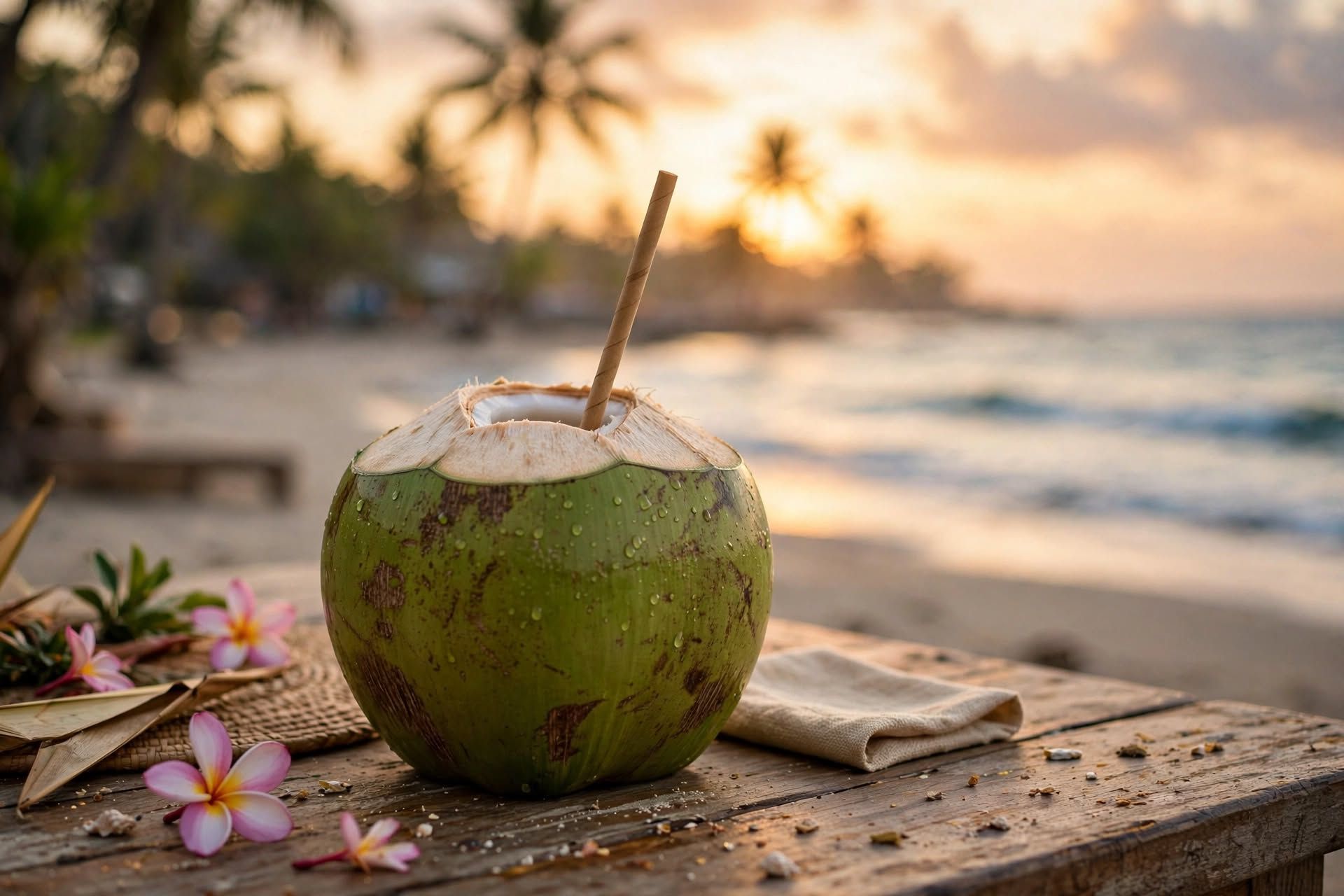
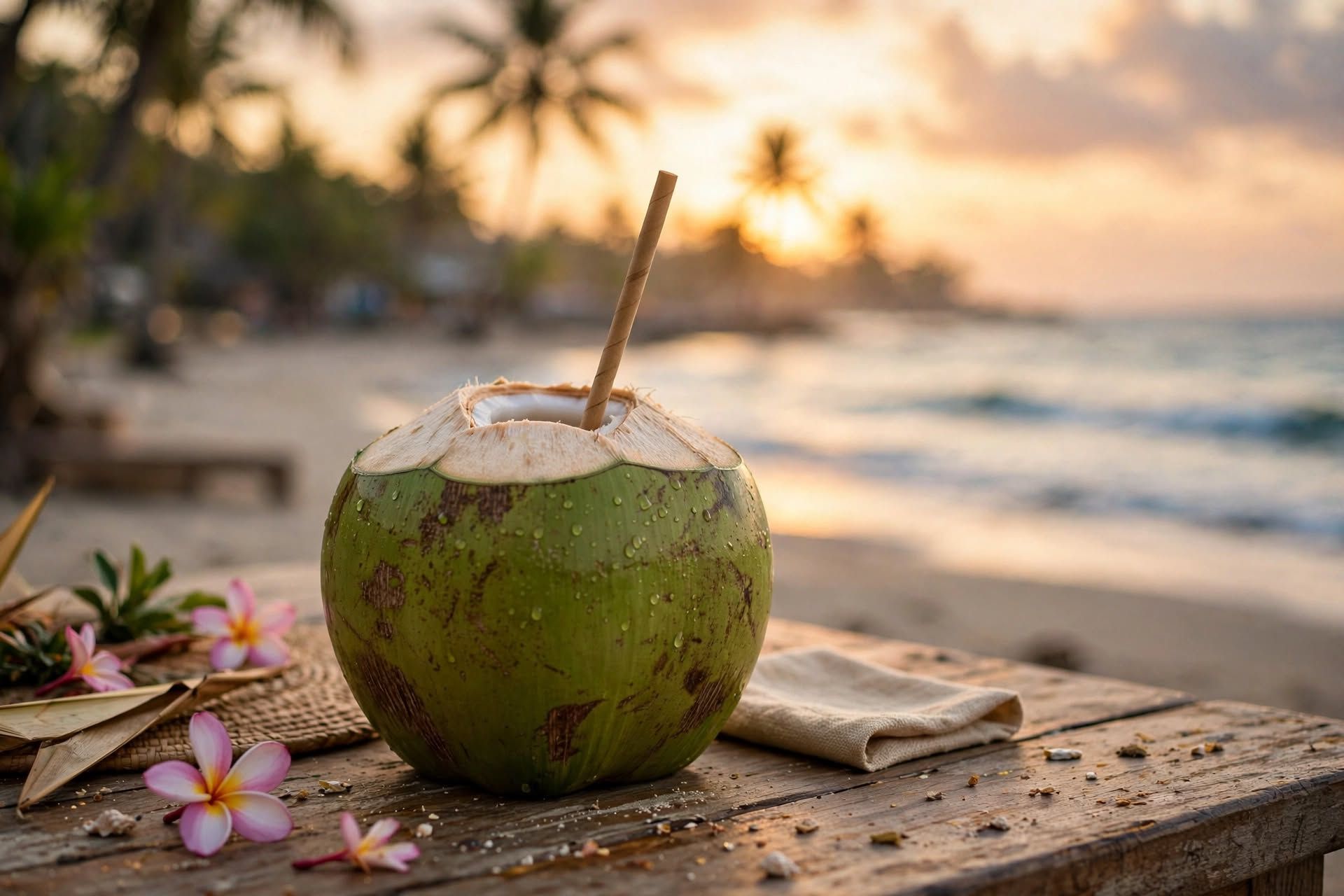
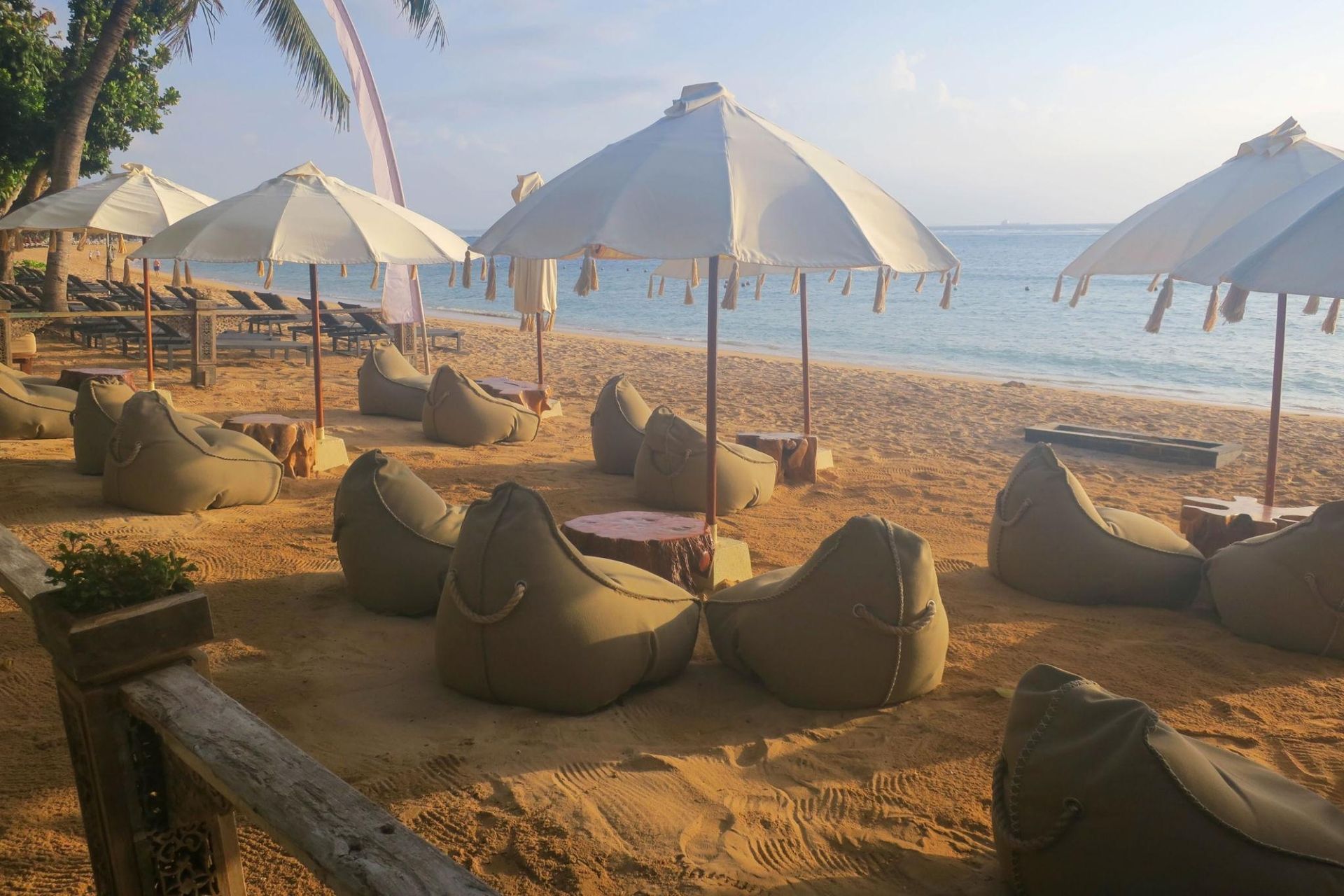
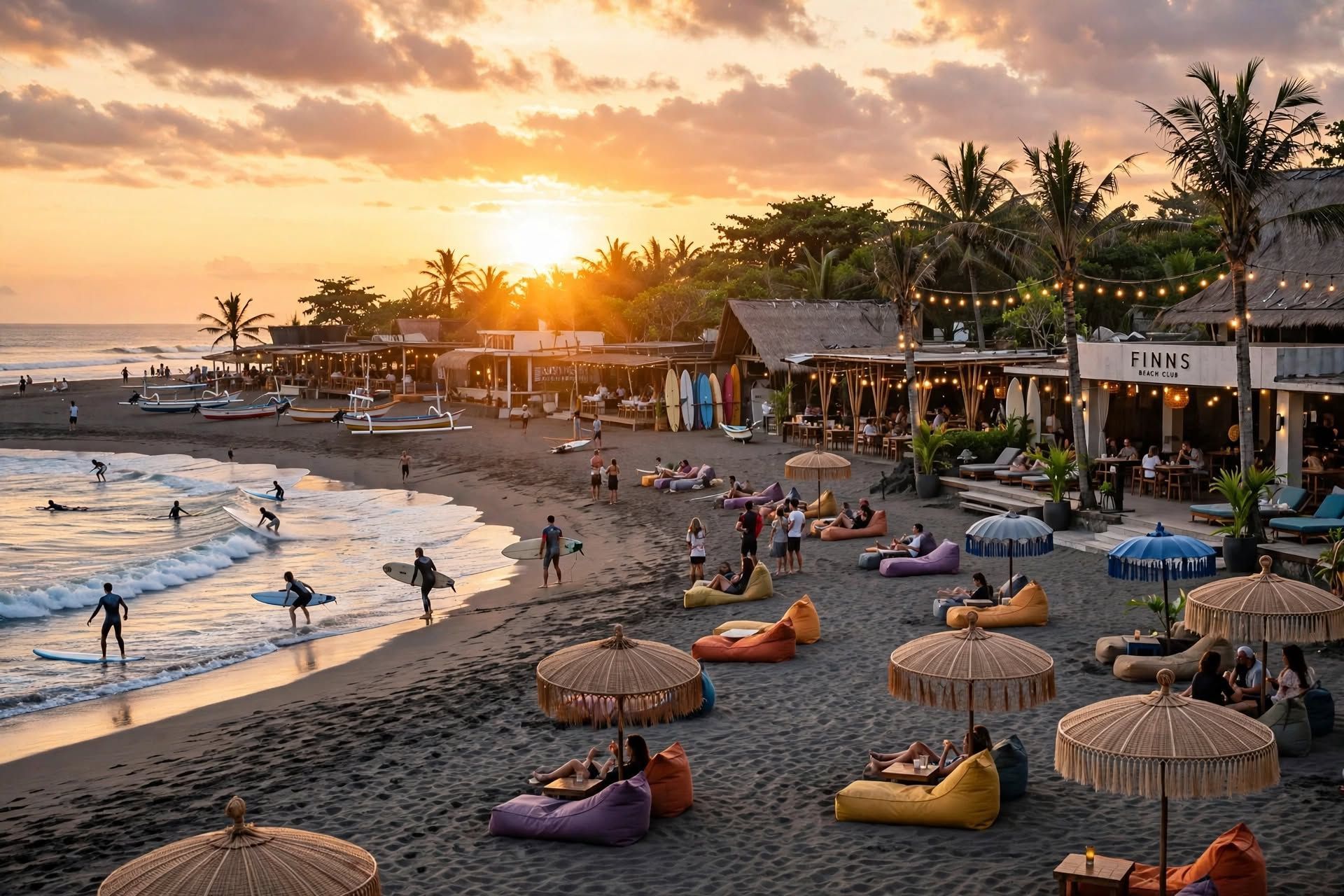
Sunset in Canggu is often portrayed as a spectacle — crowds lining the shore, music drifting from beach clubs, glasses raised against a glowing horizon. And while that version certainly exists, it is only one interpretation of the evening ritual. There is another way to experience sunset here, one that feels more personal and less performative. A quieter stretch of sand, a short walk away from the loudest speakers, can transform the same sky into something intimate. The colors unfold gradually, shifting from gold to coral to deep indigo, without urgency. In those moments, Canggu feels expansive rather than crowded.
Beach culture in this part of Bali carries layers. Beneath the social surface lies a strong connection to movement and nature — surfers reading the tide, early risers catching the first light, locals tending to daily offerings along pathways. When approached with awareness, the beach becomes less about scene and more about rhythm. Morning and late afternoon hold a softness that midday rarely does. The air cools. The pace slows. Conversations become quieter. These transitions remind visitors that Canggu’s energy is not constant; it breathes.
Lifestyle here can be as curated or as simple as one chooses. Some evenings are filled with live music and gatherings, while others are best spent with a book, a quiet dinner, or a reflective walk. The ability to choose between stimulation and stillness is what defines a refined Canggu experience. It is not about avoiding activity, but about engaging selectively. When accommodation supports that selectivity — offering calm at the edges of the day — the contrast becomes restorative rather than exhausting.
A balanced stay acknowledges both sides of Canggu. The vibrancy inspires, but the quiet sustains. After watching the sky fade into night, returning to a composed, thoughtfully designed space completes the cycle. The day closes gently instead of abruptly. Rest feels earned, not escaped into.
In this way, sunset is not simply a daily event. It is a reminder of why travelers come to Bali: for atmosphere, for light, for a sense of spaciousness that extends beyond physical landscape. Experienced intentionally, Canggu offers all of this — not loudly, but with depth.
In the end, experiencing Canggu well is not about seeing everything — it is about choosing how you move through it. The destination offers layers: creative energy, coastal movement, social spaces, quiet rituals, and moments of unexpected stillness. What defines a meaningful stay is not how much is consumed, but how intentionally each day unfolds. When travelers find a base that supports clarity rather than noise, exploration becomes more deliberate. Mornings begin with intention. Afternoons hold focus without strain. Evenings soften instead of overstimulate.
The right environment does not compete with Canggu’s vibrancy; it frames it. It allows guests to step outward when they wish to engage and inward when they need to recalibrate. This balance is subtle yet powerful. It preserves energy across days rather than draining it in a single burst. Especially for those staying longer — surfers following tides, remote workers structuring flexible schedules, couples seeking both connection and privacy — that equilibrium becomes essential.
Comfort, in this context, is not excess. It is coherence. Spaces that are thoughtfully arranged, quietly confident in their design, and positioned with awareness of their surroundings create continuity between the external and internal experience. The outside world may be dynamic, but within your base there is steadiness. That steadiness shapes how memories are formed. Instead of recalling only crowded streets or busy cafés, guests remember how they felt at the start and end of each day.
Canggu rewards travelers who seek depth over noise. It offers inspiration, movement, and connection — but it also invites pause. When your accommodation reflects that same philosophy, the stay becomes layered rather than rushed. The destination reveals itself gradually, not all at once.
Sometimes, the most memorable experiences are not the loudest ones. They are the mornings filled with soft light, the afternoons of focused calm, and the evenings that end without urgency. In Canggu, finding that rhythm is less about distance from the energy and more about choosing a space that understands how to hold it gently.